

Plaster for molds: which one to choose for smooth, defined creations
TL;DR:
To obtain defined details in silicone molds, choose a fine or ultrafine-grain plaster suitable for casting and reproducing small details.
Aqua Resin is a premium alpha plaster, 100% natural and VOC-free, designed for DIY creations with a smooth porcelain-effect finish.
Good mixing, slow pouring and light vibration of the mold help reduce air bubbles and small surface imperfections.
Have you ever poured plaster into a mold with high expectations, only to end up with bubbles, poorly defined details or a surface that was less smooth than expected? This often happens when using a material that is not suitable for casting or when some preparation steps are not followed.
Choosing the right plaster for molds makes a big difference: a fine, fluid material suitable for silicone molds allows you to obtain cleaner shapes, more readable details and a more refined finish.
In this guide, we look at which plaster to choose for silicone molds, how to prepare it, how to reduce air bubbles and which projects you can make with Aqua Resin, the premium alpha plaster designed for creative DIY.
Index
Key points
| Point | Details |
|---|---|
| Choose the right plaster | Not all plasters are suitable for molds: prefer fine or ultrafine-grain plasters, such as Aqua Resin, for more precise details. |
| Mix carefully | A correct mixture helps obtain a fluid, lump-free mix with fewer surface defects. |
| Reduce air bubbles | Gently tapping or vibrating the mold after pouring helps obtain smoother surfaces. |
| Finish after demolding | Light sanding with fine sandpaper can correct small imperfections. |
| Personalize with accessories | Pigments, glitter, Aqua Metal, gold leaf and silver leaf transform every creation into a unique object. |
Types of plaster for molds
Not all plasters are the same. This is the first thing to understand before starting any plaster for artistic creations project. There are several categories on the market, each with very different characteristics.
| Type of plaster | Grain size | Suitable for molds | Notes |
|---|---|---|---|
| Construction plaster | Coarse | No | For plastering and walls, not for fine details |
| Alabaster plaster | Medium | Partially | Fast setting, mediocre surface |
| Ceramic plaster | Fine | Yes | Good hardness, used in craft ceramics |
| Synthetic plaster, e.g. Diplast | Fine | Yes | Good workability compared to ceramic plaster |
| Premium alpha plaster, Aqua Resin | Ultrafine | Yes, optimal | Natural, VOC-free, porcelain-effect finish |
Construction plaster, plasterboard, wall plasters and materials for orthopedic use are not designed for creative DIY with silicone molds. They have different characteristics and do not deliver the smooth, detailed surface you are looking for in a decorative object.
Aqua Resin is a premium alpha plaster with an ultrafine grain. This characteristic helps the material distribute better inside the silicone mold and reproduce more precise details, with a naturally smooth and compact surface.
It is 100% natural, VOC-free, safe for home use and simply mixes with water. Its Shore D91 hardness offers high scratch and impact resistance, making it suitable for decorative creations such as favors, trays, catchall trays, candle holders and small home decor objects.
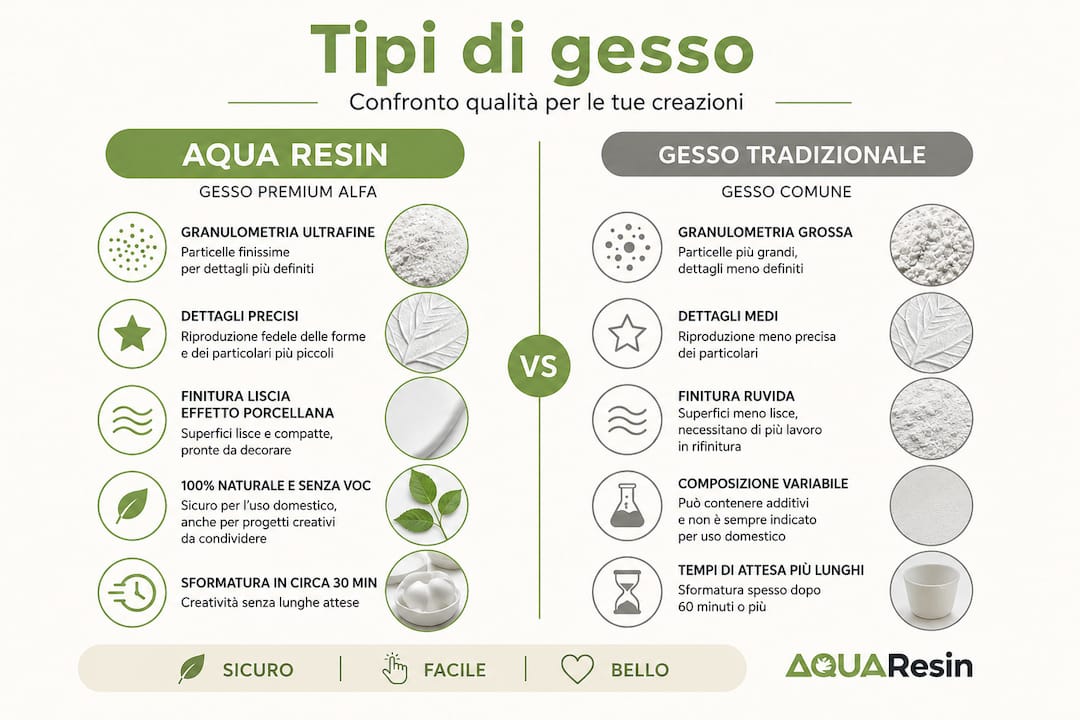
Pro Tip: when choosing a plaster for molds, check the grain size and intended use. A finer powder is generally more suitable for reproducing details and smooth surfaces, especially in silicone molds.
How to prepare and mix plaster
Mixing is one of the most important phases when working with plaster for molds. A mixture that is too liquid can weaken the creation, while one that is too dense may not reach the details of the mold properly. The goal is to obtain a fluid, homogeneous mixture that is easy to pour.
Follow these steps to get the best result with Aqua Resin:
-
Measure water and powder precisely. With Aqua Resin, use the ratio indicated by the product: 100 parts powder and 30 parts water. Weighing the ingredients helps obtain more consistent results.
-
Pour the water into the container first. Then gradually add Aqua Resin, sprinkling it in, to reduce the formation of lumps.
-
Mix slowly. Use a spatula and work the mixture with regular movements, avoiding incorporating too much air.
-
Check the consistency. The mixture should be fluid, creamy and suitable for pouring into the silicone mold.
-
Pour within the useful working time. Do not wait too long: prepare the mold before starting the mixture, so you can pour the compound immediately.
Pro Tip: prepare everything before mixing: mold, spatula, water, powder and scale. This way you reduce downtime and work the mixture while it is still fluid.
Pouring techniques for defined details
Pouring plaster into the mold seems simple. In reality, it is the moment when the final quality of the object is decided. Air bubbles trapped during pouring are the main enemy of a smooth surface. Here is how to manage this phase at its best.
-
Pour slowly and continuously. Start from one point of the mold and let the mixture gradually spread. This helps reduce air pockets and empty areas.
-
Do not fill the mold all at once. If the mold has deep details, pour a small amount of material first, gently tilt the mold and then complete the pour.
-
Tap the mold on the surface. After pouring, gently tap the mold on the table for a few seconds. This technique helps air bubbles rise to the surface.
-
Wait the correct time before demolding. With Aqua Resin, demolding takes place in about 30 minutes. Times may vary depending on thickness, temperature and mold shape.
-
Finish only when the piece is stable. If you notice small imperfections, you can work with fine sandpaper once the creation is fully dry and easy to handle.
Light vibration is a simple but very useful trick: you do not need professional equipment; gently tapping the mold is enough. The goal is not to shake it forcefully, but to help trapped air escape without deforming the pour.
Pro Tip: if you work with highly detailed molds, first pour a small layer of mixture and distribute it well in the deepest areas. Then complete the pour. This helps improve detail rendering.
What you can create with plaster for molds
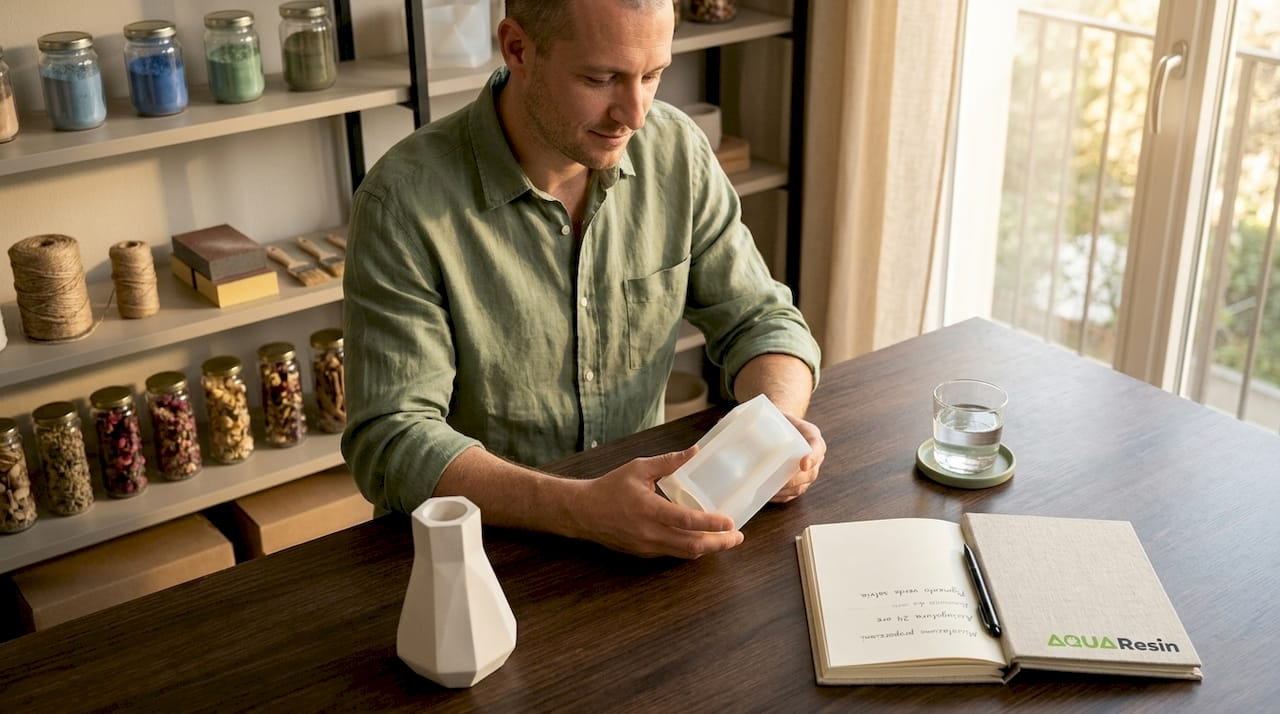
Plaster for silicone molds opens up a world of creative possibilities. From home decoration to personalized gifts, the applications are truly many. Aqua Resin premium alpha plaster, thanks to its smooth porcelain-effect finish, is ideal for objects that stand out for care, elegance and personalization.
Here are some of the creations most loved by DIY creatives:
-
Handmade favors. Small personalized objects for weddings, baptisms or communions. The smooth finish of Aqua Resin makes them elegant and refined, perfect to decorate with gold or silver leaf for a sophisticated touch.
-
Trays and catchall trays. Functional and decorative objects for the home. With rectangular or oval molds, you obtain solid and resistant pieces thanks to Aqua Resin’s Shore D91 hardness.
-
Candle holders and coasters. Minimal-design creations that lend themselves to personalization with colored pigments, glitter or metallic effects.
-
Decorations and home accessories. Frames, letters, geometric shapes, botanical elements. Every silicone mold becomes an opportunity to create something unique for your home.
Object Recommended mold Suggested personalization Favors Small, detailed shapes Gold leaf, pastel pigments Tray / catchall tray Rectangular, oval or organic Aqua Pigment, marble effect Candle holder Cylindrical or geometric Aqua Glitter, Aqua Metal Coasters Round, square or irregular Pigments, glitter, terrazzo effect Wall decorations Botanical or abstract shapes Silver leaf, acrylic paint
You can find more ideas and practical tips in the guide dedicated to creative plaster for DIY, designed for those who want to create beautiful objects even without experience.
Aqua Resin vs traditional plaster
Why choose Aqua Resin instead of a traditional plaster that is not specifically designed for creative molds? The difference lies in the quality of the final result, the grain size and the simplicity of the process.
-
Ultrafine grain. Ultrafine grain is essential for an even spread and simple sanding. With Aqua Resin, every detail of the mold is faithfully reproduced.
-
Porcelain-effect finish. The surface of the demolded object is already naturally smooth and compact, without the need for heavy additional treatments.
-
High mechanical resistance. Shore D91 means that the object resists everyday scratches and impacts. It is not a fragile plaster to display only under a glass dome.
-
100% natural and VOC-free. It is designed for simple and safe home use. In the case of creative activities with children, adult supervision is always recommended.
-
Easy to use. It mixes with water, pours into the mold and demolds in about 30 minutes. No technical experience is needed to obtain a refined result.
Construction plaster or plaster not designed for creative molds can be less predictable in detail rendering, finish and final resistance. For this reason, when you want to create refined decorative objects, it is important to choose a material suitable for casting in silicone molds.
Common mistakes to avoid when choosing plaster for molds
One of the most common mistakes is using a plaster that is not suitable for silicone molds. A material that is too coarse or designed for other uses can produce rough surfaces, poorly readable details and a finish that is more difficult to refine.
The second mistake is not weighing water and powder. Even with an easy-to-use material, proportions matter: too much water can make the creation more fragile, while too little can prevent the mixture from properly reaching the mold details.
The third mistake is demolding too early. With Aqua Resin, you can demold the creation after about 30 minutes, but it is always important to evaluate thickness, mold shape and environmental conditions. For finishing, decorating or sanding, wait until the piece is fully stable.
Finally, do not skip small tests. Before making a series of favors, trays or candle holders, test color, mold and finish on a sample. It will help you obtain a more consistent result.
The right material does not replace creativity, but helps it express itself better.
Recommended products to get started with Aqua Resin
If you want to start creating with silicone molds, you can begin with white Aqua Resin, the premium alpha plaster designed to obtain smooth surfaces, defined details and a porcelain-effect finish even in DIY projects.
Pair it with the silicone molds best suited to your project: small and detailed shapes for favors, larger molds for trays and catchall trays, cylindrical or geometric shapes for candle holders and coasters.
To personalize your creations, you can use Aqua Pigment, Aqua Glitter, Aqua Metal, gold leaf and silver leaf. This way you can transform every pour into a unique object, consistent with your style.
FAQ
Which plaster is best for silicone molds?
The best plaster for silicone molds is one with a fine or ultrafine grain. Aqua Resin, thanks to its ultrafine grain, helps obtain more precise details, a smooth porcelain-effect finish and good final resistance.
How do you avoid air bubbles in poured plaster?
After pouring the plaster into the mold, gently tap the mold on the surface for a few seconds. This helps air bubbles rise and reduces the risk of small surface imperfections.
How long does it take to demold plaster from the mold?
With Aqua Resin, demolding takes place in about 30 minutes. Times may vary depending on the thickness of the object, the shape of the mold and environmental conditions.
Can I paint and decorate plaster after demolding?
Yes. You can personalize creations with pigments, acrylic paints, gold and silver leaf, glitter and metallic finishes. Before decorating, make sure the piece is fully dry and stable.
Is Aqua Resin plaster safe for home use?
Aqua Resin is 100% natural, VOC-free and safe for home use. In the case of creative activities with children, adult supervision and following the instructions for use are always recommended.
Useful products and resources
-
Guide to plaster in hobby crafting: creative ideas, techniques and tips to get started.
-
Why use creative plaster: benefits and ideas for DIY.
-
White Aqua Resin: premium alpha plaster, extra white, 100% natural, VOC-free, safe and easy to use.
-
Creative Drop Mold: to create decorative trays with a soft edge.
-
Round Tray Mold: to make classic round trays and home decor objects.
Share:
0 comments
Products recommended in this article


Your first project? Start here and save 10%!
Download the free eBook with step-by-step tutorials and original ideas to get started. All you need is your email address!